
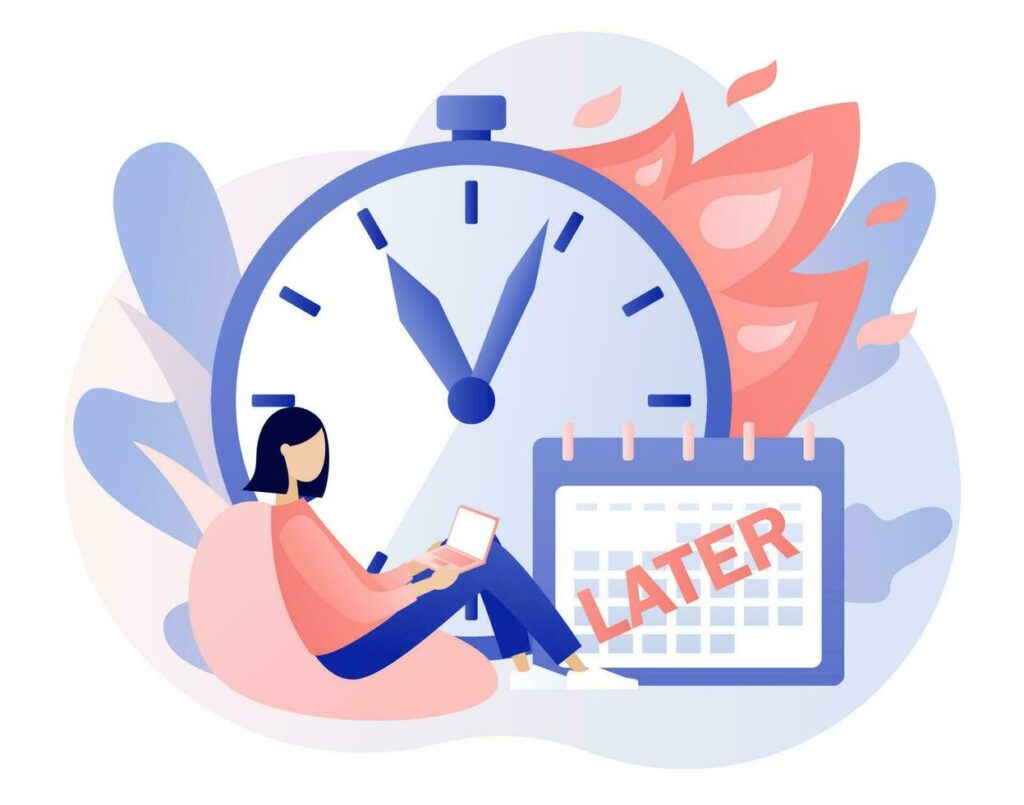
You leave an email sitting in your inbox for four days straight, even though typing a reply would take all of five minutes. You lie awake replaying a totally normal conversation from Tuesday, picking apart every word you said. You dodge a phone call. It’s easier when ten minutes of awkwardness feels like too much.
It’s exhausting, and the worst part is the internal monologue that follows: I’m just lazy. What is wrong with me? Why can’t I function like a normal adult?
One of the things I hear often is clients apologizing for “being lazy” before they’ve even told me what they’re struggling with. More often than not, what they’re describing isn’t laziness at all.
Your brain may have learned that avoiding conflict reduces the chance of you getting criticized, so it returns to that same strategy even when it’s not serving you in any way.
Now, that doesn’t mean the behavior is helpful, and it definitely doesn’t mean your brain is right about the current danger. It just means the problem isn’t a lack of discipline. The real question is: is your nervous system reacting to the actual reality of your life today, or is it just running on old beliefs from a time when you had to survive a lot more?
Your brain prioritizes your survival over happiness
We tend to walk around assuming our brains are optimized to make us happy, confident, and productive. But your brain is designed to keep you alive before it worries about keeping you happy.
The catch is that your brain reacts to everyday situations as though they’re far more dangerous than they actually are. Your stress response can be activated even with the low-stakes discomfort of speaking up in a meeting or setting a boundary with a difficult family member.
Your nervous system tends to run on history rather than pure logic. If speaking your mind got you shut down or criticized at some point in your life, your brain files that memory under “hazard”. That’s why a harmless Slack message from your boss saying “Hey, do you have a sec?” can instantly trigger physical panic. Your body isn’t just reacting to this singular interaction, it’s reacting to everything your brain has learned could possibly happen next.
Why “just push through it” backfires
Most self-help advice boils down to forcing yourself out of your comfort zone, which is nice in concept but significantly more difficult to actually execute. Imagine you’re standing next to a blaring fire alarm while someone tells you the building isn’t actually burning down. You can chant logic to yourself all day but your ears are still ringing, and your body is still screaming to run. Sheer force of will isn’t going to fix the fire alarm or make your ears stop throbbing from listening to it for so long.
And survival mode doesn’t always look like a dramatic panic attack. Most of the time, it’s much quieter:
- Over-researching for hours because making a final decision feels risky.
- Rewriting an email ten times because hitting send feels vulnerable.
- Saying yes when you mean no, because disappointing someone else feels scarier than burning yourself out.
On the surface, it can read like procrastination or people-pleasing – underneath, it’s your nervous system trying to keep you safe to the best of its abilities.
Rewiring through experience, not epiphanies
You can’t logic your way out of a physiological reaction. Understanding why you procrastinate is a nice first step, but insight alone doesn’t actually do anything to change the pattern. The thing that can is exposure to new experiences.
Your brain updates when you give it small, repeatable proof that you can survive uncomfortable things:
- Having that hard conversation without the relationship imploding.
- Making a minor mistake at work that didn’t actually ruin your career.
- Setting a boundary that was met with a shrug instead of a disaster.
Changing these patterns isn’t about shaming yourself into doing better. It starts with getting genuinely curious about what your brain is trying to protect you from, whether that’s a fear of failure or rejection, or just the thought of losing a sense of control.
TL;DR
At the end of the day, you’re not broken. You’re just responding the exact way you learned how to survive. Your nervous system may be responding like an old threat is still present even when your current circumstances have shifted.
That doesn’t mean you’re stuck with these thought patterns forever, either. The fix isn’t more self-criticism, it’s just figuring out what the pattern is actually trying to do for you.
Schedule a Free 15-Minute Consultation, we can explore what your nervous system is trying to protect you from and build strategies that work with it instead of constantly fighting against it.