
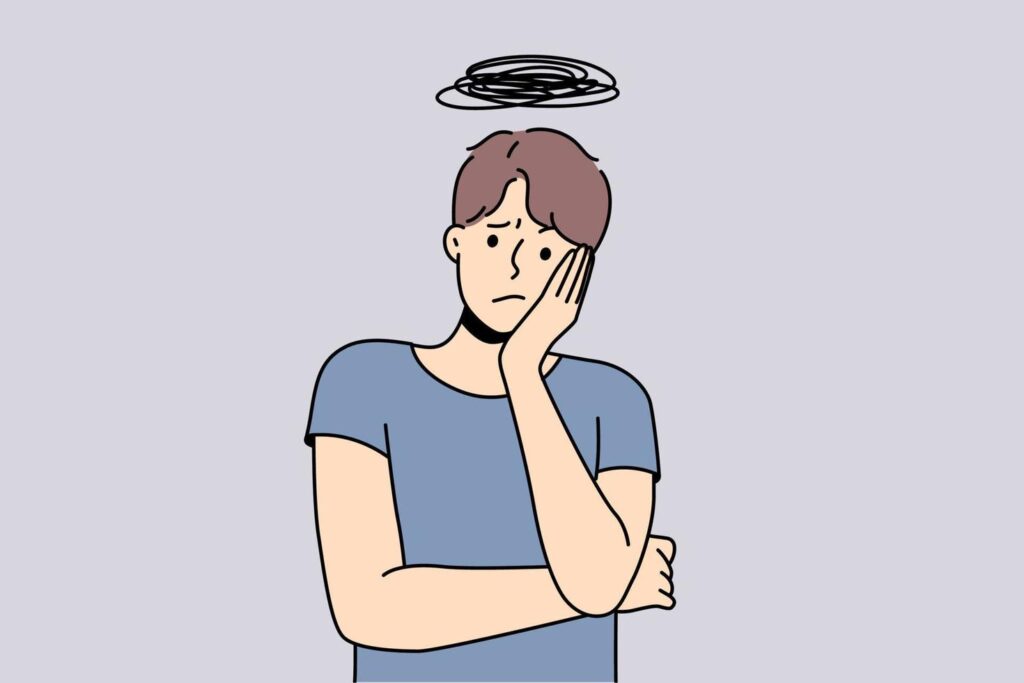
Here’s an uncomfortable truth:
Most people aren’t actually self-aware.
They’re just really good at overthinking their emotions instead of actually feeling them.
We act like if we can explain our feelings with enough nuance, we won’t have to actually sit in them. Spoiler: your nervous system is not impressed by your collegiate-level breakdown of why you’re anxious. It wants you to feel the damn feeling.
If your brain won’t shut up long enough for you to notice how you actually feel, here are the signs you’re overthinking your feelings and avoiding your emotions.
1. You can give a dissertation on your childhood but can’t identify how you feel right now
You can tell me who said what in 2008, why your attachment style leans avoidant, and how your parents shaped your identity…
… but if I ask
“Okay, what emotion is actually in your body at this moment?”
you default to:
“Well, logically…”
Hold the logic for a second. I’m asking about the feeling, right here, right now. And it’s completely normal to drift into analysis when what’s underneath feels uncomfortable. But this is emotional avoidance dressed up as insight.
2. You turn every feeling into a problem to solve
Anxiety? “Let me Google strategies.”
Sadness? “Let me journal for 15 minutes about why this is happening.”
Anger? “Let me mentally analyze the root cause until it goes away.”
Here’s the thing:
You can’t out-think your way out of a feeling.
Feelings aren’t puzzles, they’re experiences.
You don’t get over feelings by outsmarting them. You get through them by actually feeling them. That’s the part your brain keeps trying to skip and why you’re in this loop of overthinking your feelings.
3. You explain your feelings instead of expressing them
You don’t say:
“I’m hurt.”
You say things like:
“I think I’m feeling this way because when I was younger, I learned that…”
“I know I shouldn’t feel like this, but…”
“I logically understand why it doesn’t make sense to be upset.”
This is emotional dodging.
You’re narrating the feeling instead of actually feeling it.
4. You confuse emotional numbness with emotional control
If your first reaction to stress is to flatline and go numb with no tears, no anger, no reaction, that isn’t calm. That’s a shutdown.
Numbness is a survival strategy, not emotional mastery.
It means your body is overwhelmed, not that you’re above it.
5. You think naming the feeling = processing the feeling
Labeling emotions is healthy.
But labeling alone is the emotional equivalent of identifying a fire and then just… walking away from it.
You still have to do the uncomfortable part: letting it burn for a minute.
Processing = feeling. Not just naming, analyzing, or philosophizing.
So what do you actually do instead of overthinking?
Here’s the simple answer:
Stop what you’re doing for one minute.
Label the emotion clearly: “This is anger,” “This is shame,” “This is fear.” You can use this Feelings wheel to identify the specific emotion.

Sit with it for 90 seconds, literally set a timer on your phone.
Slow exhale longer than your inhale (that’s what resets your nervous system).
Then choose your next step from a calmer place.
Your feelings aren’t trying to ruin your life. They’re trying to get your attention. And the longer you keep turning them into a homework assignment, the louder they get.
If this feels familiar… that’s what therapy is for.
The only way through your emotions is to feel them. All the charts, lists, and Google searches in the world won’t make grief, sadness, or anger disappear. Sitting with them – messy, uncomfortable, human – is what actually heals you.
If you want support learning how to feel instead of overthinking your feelings, communicate instead of shut down, and actually understand what your nervous system needs:
👉 Book a session with me here: Book here
You don’t have to untangle your emotional mess alone, and you definitely don’t have to keep living in your head. Stop thinking so much. Start feeling.